How to Pack for a Trip With a Client Site Visit (Factory, Warehouse, Outdoor Settings)
July 27, 2026 · 4 min read
A client site visit breaks the usual business-trip packing formula: the meeting itself might call for business casual, but the actual site, a factory floor, a warehouse, an outdoor facility, has its own dress requirements that have nothing to do with looking sharp and everything to do with staying safe and functional. Pack closed-toe shoes with real tread, durable washable clothing, and a separate business-casual set for the meeting portion.
Quick Answer
- Closed-toe shoes with real tread; confirm if steel-toe or composite-toe is required
- Durable, washable fabric over anything delicate that can't handle dust or grime
- Layers for wildly different temperatures across a site, plus real outdoor weather
- Confirm PPE responsibility with the host, don't assume you need to bring your own
- Pack a separate business-casual set for the meeting or dinner portion of the trip
Why Footwear Is the Item Most Likely to Block Entry
Start with footwear, since it's the item most likely to actually block entry to a site. Closed-toe shoes with real tread and support are non-negotiable for most factory or warehouse environments, sneakers or work-appropriate boots, not dress shoes or anything open. Some facilities require steel-toe or composite-toe boots specifically. It's worth checking with the client or site host ahead of time rather than assuming standard closed-toe shoes will clear their safety requirements, since a facility that requires toe protection generally won't make an exception.
Clothing needs the same practical filter. Durable, washable fabric that can handle dust, grease, or general grime beats anything delicate, a site visit is not the place for fine wool or anything you'd be upset to get dirty. Layers matter more here than on a typical office day too: factory and warehouse interiors run at wildly different temperatures depending on the section, a loading dock versus a climate-controlled clean room, for example, and outdoor site visits obviously add real weather into the mix on top of that. A base layer plus something you can shed or add, a light jacket or vest, handles that swing better than a single fixed outfit.
Why Safety Gear Usually Isn't Yours to Pack
Safety gear itself is usually the client's responsibility to provide on-site, hard hats, safety vests, and specialized PPE typically aren't something a visitor packs and brings themselves, and showing up with your own can actually create a mismatch with the site's specific safety protocols. It's worth confirming this explicitly beforehand rather than guessing, since assuming either way, that you need your own, or that none will be needed, can leave you either over-equipped or turned away at the gate.
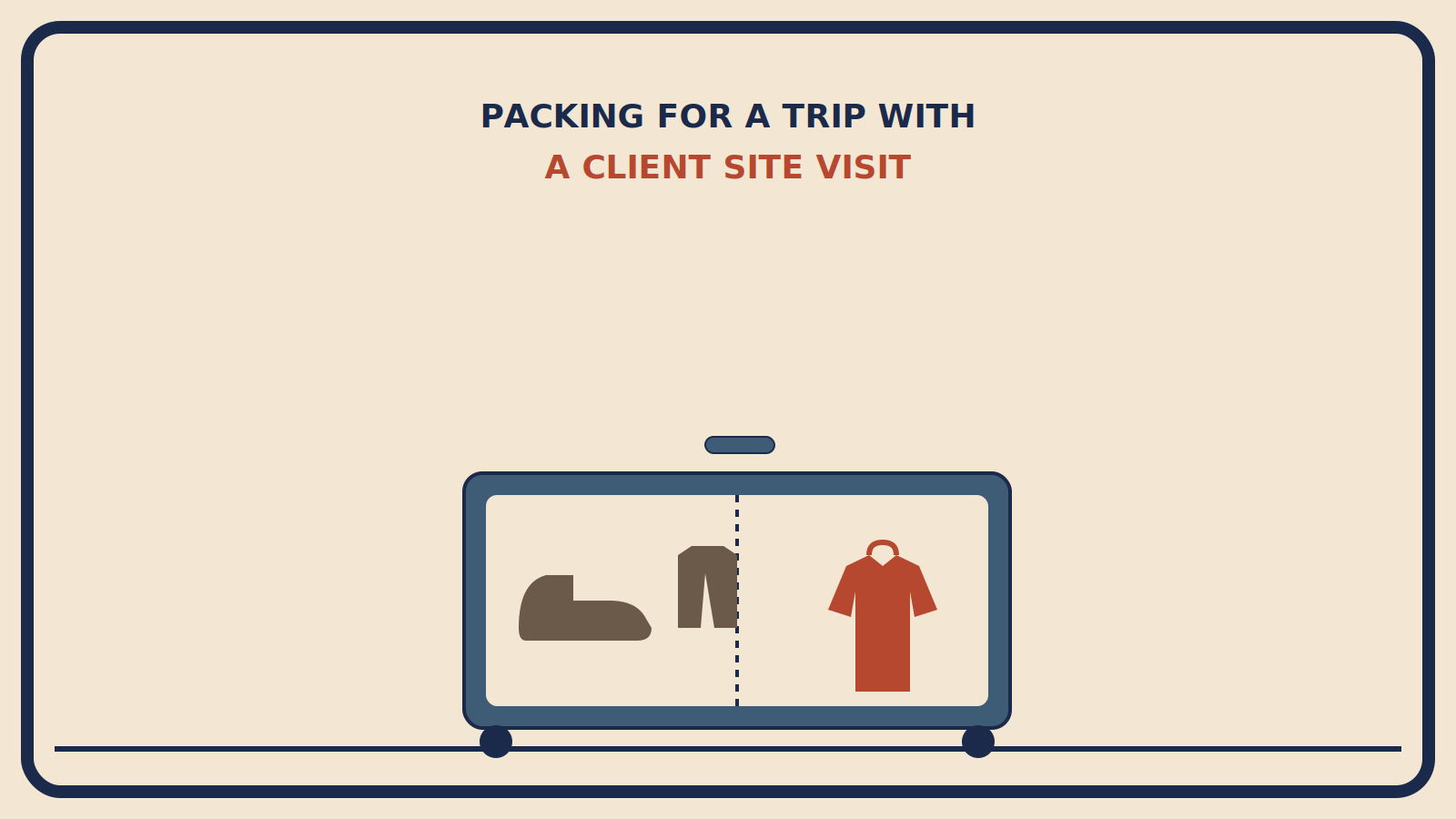
A few small details matter more on a site visit than a normal meeting: skip loose jewelry, dangling accessories, or a long scarf, since those genuinely become safety hazards around machinery in a way they never would in a conference room. Tie back long hair. Keep a basic, packed set of business-casual clothing separate for whatever meeting or dinner follows the site portion of the trip, the two halves of this kind of trip really do need two different wardrobes packed with equal intention, not one compromise outfit trying to cover both.
Common Mistakes
People pack one outfit trying to cover both the site visit and the client meeting. In practice, the two halves of this kind of trip need two different wardrobes packed with equal intention, since dress-shoe-appropriate meeting attire and closed-toe site footwear rarely overlap.
People assume they should bring their own PPE just in case. In practice, safety gear is usually the client's responsibility to provide, and bringing your own can create a mismatch with the site's specific protocols, so confirming ahead of time beats guessing either way.
People pack a favorite piece of clothing for a site visit. In practice, dust, grease, and general grime are a real possibility on a factory floor or outdoor site, so it's worth packing something functional you won't mourn if it doesn't survive the visit in perfect shape.
Beyond the site-specific gear, the general business-trip fundamentals still apply: versatile, mix-and-match business pieces for the meeting portions, a permanent pre-packed toiletry kit that removes decision fatigue, and, for longer trips, a laundry plan rather than packing enough clothes for every single day.
Given how much rougher a site visit is on gear compared to a standard hotel-and-boardroom trip, the luggage itself is worth a second thought too, anything carrying gear that might get dusty, damp, or knocked around benefits from more structural protection than a soft-sided bag typically offers. This piece comparing hard shell vs. soft shell luggage is worth reading alongside this one for exactly that reason.
Frequently Asked Questions
What shoes should I pack for a factory or warehouse site visit?
Closed-toe shoes with real tread and support are non-negotiable for most factory or warehouse environments, sneakers or work-appropriate boots, not dress shoes or anything open. Some facilities require steel-toe or composite-toe boots specifically, so it's worth checking with the client or site host ahead of time.
Should I pack my own safety gear for a client site visit?
Usually not. Safety gear like hard hats, safety vests, and specialized PPE is typically the client's responsibility to provide on-site, and showing up with your own can actually create a mismatch with the site's specific safety protocols. Confirm this explicitly beforehand rather than guessing.
What clothing works best for a factory or outdoor site visit?
Durable, washable fabric that can handle dust, grease, or general grime beats anything delicate. Layers matter more here than on a typical office day too, since factory and warehouse interiors run at wildly different temperatures depending on the section, and outdoor visits add real weather on top of that.
Should I wear jewelry or accessories on a client site visit?
No. Skip loose jewelry, dangling accessories, or a long scarf, since those genuinely become safety hazards around machinery in a way they never would in a conference room. Tie back long hair too.
How do I pack for both a site visit and a client meeting on the same trip?
Keep a basic, packed set of business-casual clothing separate for whatever meeting or dinner follows the site portion of the trip. The two halves of this kind of trip really do need two different wardrobes packed with equal intention, not one compromise outfit trying to cover both.
JetKit is an AI app that builds your packing list automatically based on your closet and your trip.