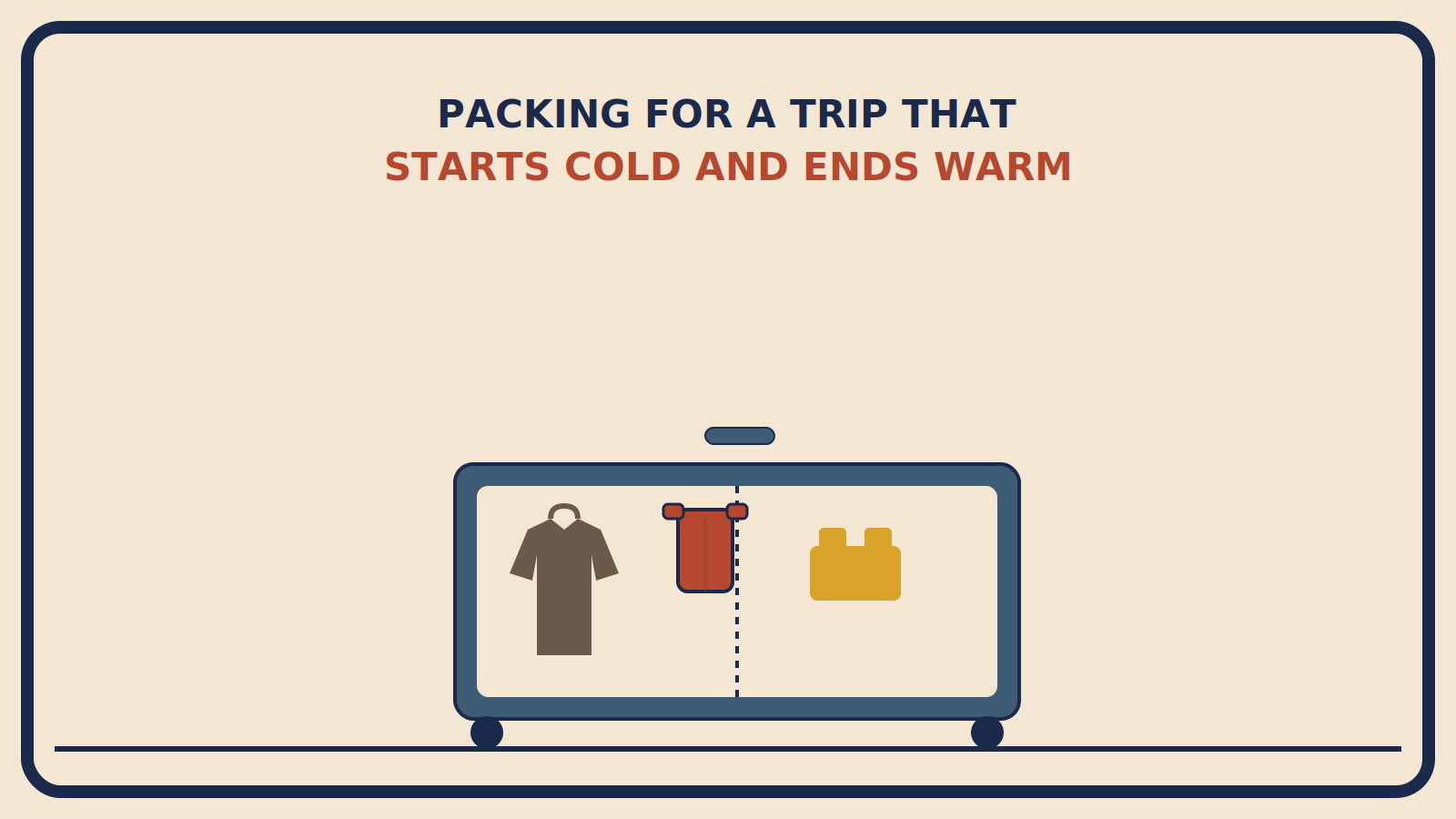
How to Pack for a Trip That Starts Cold and Ends Warm
July 27, 2026 · 4 min read
A trip that opens in a cold climate and closes in a warm one creates a packing problem a normal one-climate trip doesn't: you're carrying two different wardrobes in one bag, and only one of them is relevant at any given point. Keep the clothing separated with packing cubes from the start, lean on versatile mix-and-match pieces, and shift used cold-weather items toward the back of the bag as the trip progresses.
Quick Answer
- Separate cold-weather and warm-weather clothes into their own packing cubes from the start
- Lean on versatile pieces like a chambray shirt that work across both climate legs
- Move used cold-weather clothes toward the back of the bag as the trip progresses
- One coat is usually enough; wear your bulkiest shoes while traveling to save space
- Don't overpack the cold-weather half just because it comes first
Why Separation Matters From the Start
One traveler's real example makes the case well: two weeks in Ireland and Hungary at 50 to 60°F, followed by a week in hot, humid Israel, all packed into a single carry-on without checking a bag. Keep the clothing separately from the start, rather than mixing cold-weather and warm-weather pieces into one undifferentiated pile. Packing cubes are the natural tool here, one cube or set for the cold-climate stretch, one for the warm-climate stretch, so you're not digging through summer tank tops to find a sweater on a chilly first week, or vice versa on the back half of the trip. Rolling each item before it goes into the cube saves additional space on top of the separation itself.
Versatile, mix-and-match pieces do a lot of the heavy lifting across both halves of a trip like this. A chambray shirt or similar mid-weight layer can look dressy, go over a tank top, or work on its own depending on the temperature, that kind of piece earns double duty across both climates rather than being useful for only one leg of the trip. Long-sleeve shirts you'd wear alone in the cold stretch can layer under something lighter once the weather turns, rather than getting replaced outright by a separate warm-weather wardrobe.
Why Reorganizing Mid-Trip Matters
As you use the colder clothes, start putting them toward the back of the luggage. Once the cold-weather leg of the trip wraps up, those pieces aren't needed again until the very end, if the return trip loops back through cold weather, or possibly not at all. Shifting them to the back of the bag as you go keeps the currently-relevant warm-weather items in the easy-access front of the suitcase, instead of digging past bulky sweaters and a coat every time you need a t-shirt for the second half of the trip.
Footwear benefits from the same dual-purpose thinking. A pair of boots handles the cold stretch and doubles as in-transit footwear, since wearing the bulkiest shoes while traveling frees up bag space either way, while a pair of flats or comfortable walking shoes carries through both halves of the trip. It's worth building in a little flexibility here too, weather doesn't always match the forecast exactly, and a "just in case" pair that ends up barely worn is a common outcome on this kind of trip. Better to lean toward the more versatile option than the more climate-specific one when in doubt.
Common Mistakes
People pack a full cold-weather wardrobe instead of one flexible coat. In practice, one medium or heavy coat, depending on how cold it actually gets, covers the colder days fine, and it gets packed away toward the back once the trip moves into warmer territory.
People overpack the cold-weather half because it's the leg they're about to experience. In practice, it's easy to over-prepare for the immediate leg and underestimate how much space that leaves for the warm-weather half waiting at the back of the bag.
People mix both climates' clothes into one pile from the start. In practice, separating them into their own packing cubes from day one avoids digging through the wrong season's clothes at exactly the point in the trip when time matters most.
The core tool that makes this whole approach work is a jacket or outer layer flexible enough to handle both ends of the temperature range without needing a full separate wardrobe for each. This piece on choosing a travel jacket for multiple climates is the natural next read, since a well-chosen jacket does for outerwear what a chambray shirt does for the rest of the wardrobe: one piece covering a wider temperature range than its bulk would suggest.
Frequently Asked Questions
How do I organize a suitcase for a trip that changes climate halfway through?
Keep the clothing separated from the start rather than mixing cold-weather and warm-weather pieces into one pile. Packing cubes are the natural tool here, one cube or set for the cold-climate stretch, one for the warm-climate stretch, so you're not digging through summer tank tops to find a sweater on a chilly first week.
What kind of clothing works best across both a cold and warm leg of a trip?
Versatile, mix-and-match pieces do a lot of the heavy lifting. A chambray shirt or similar mid-weight layer can look dressy, go over a tank top, or work on its own depending on the temperature. Long-sleeve shirts worn alone in the cold stretch can layer under something lighter once the weather turns.
Should I reorganize my suitcase as the trip progresses?
Yes. As you use the colder clothes, start putting them toward the back of the luggage, since once the cold-weather leg wraps up, those pieces aren't needed again until the very end, if at all. That keeps the currently-relevant warm-weather items in the easy-access front of the suitcase.
How many coats or shoes do I need for a trip with two climates?
One coat is usually enough for the cold-weather stretch rather than a full cold-weather wardrobe. For shoes, a pair of boots handles the cold stretch and doubles as in-transit footwear, while a pair of flats or comfortable walking shoes carries through both halves of the trip.
What's the most common packing mistake on a two-climate trip?
Overpacking the cold-weather half just because it's early in the trip and feels more present. It's easy to over-prepare for the leg you're about to experience and underestimate how much space that leaves for the warm-weather half waiting at the back of the bag.
JetKit is an AI app that builds your packing list automatically based on your closet and your trip.