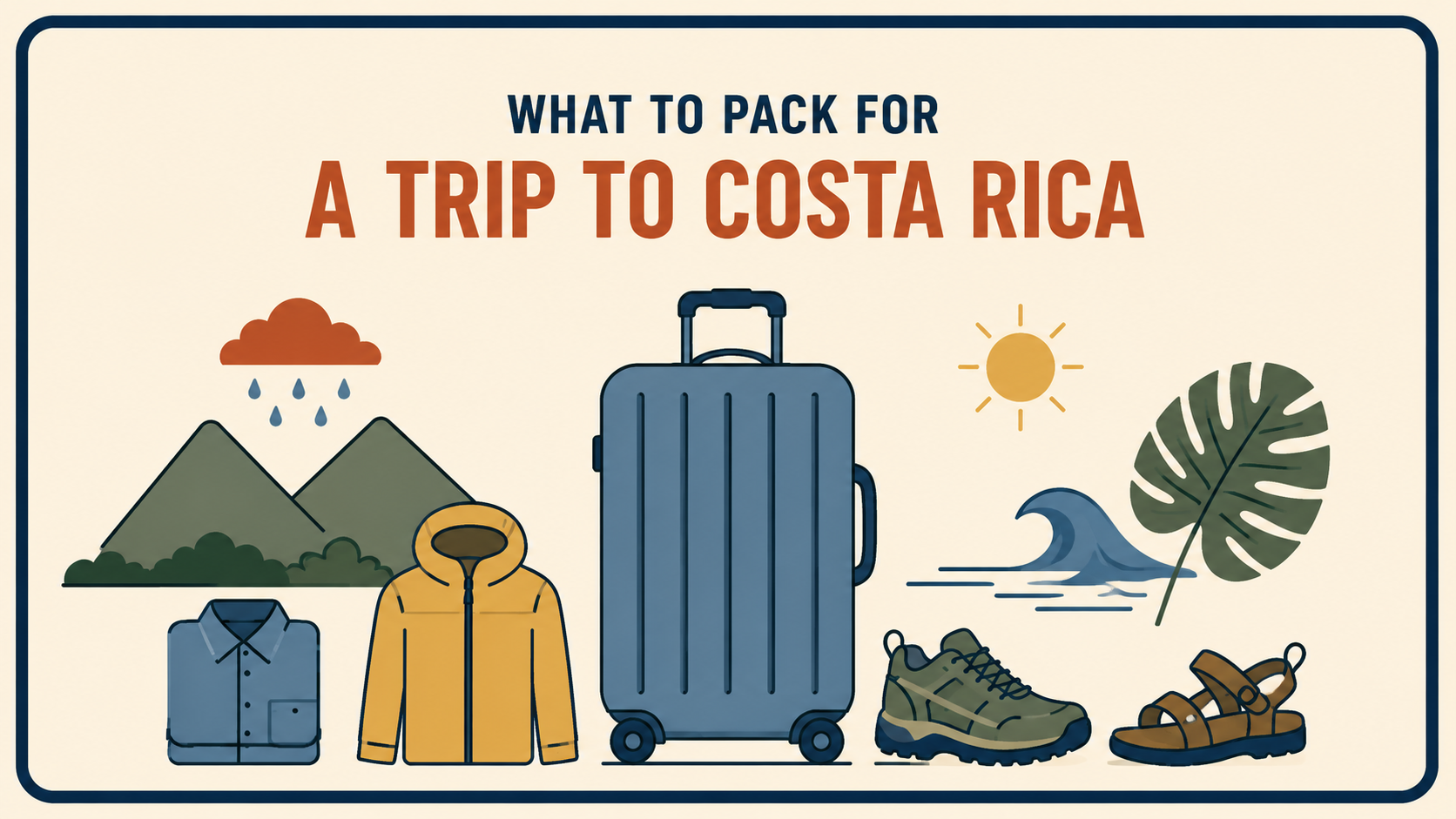
What to Pack for a Trip to Costa Rica
July 28, 2026 · 5 min read
Costa Rica rewards travelers who pack for changing conditions instead of a single destination. A trip might begin on a humid Pacific beach, continue through rainforest trails, and end in the cool air of a cloud forest. The smartest suitcase isn't built for one place. It's built for versatility, with quick-drying clothing, light layers, and gear that handles heat, humidity, and rain without unnecessary bulk.
Quick Answer
- Pack lightweight, quick-drying clothing instead of heavy cotton.
- Dress casually for almost every destination outside central San José.
- Bring one lightweight rain jacket and one warmer layer for higher elevations.
- Wear sandals around beaches and towns, but pack hiking shoes for trails.
- Build your suitcase around versatile pieces that work across multiple climates.
Why Costa Rica Rewards Versatility
Costa Rica may look small on a map, but it contains an unusually diverse range of climates. Coastal regions such as Guanacaste are typically hot and dry, while destinations like Monteverde feel surprisingly cool because of their elevation and persistent mist. Even within a single day, the weather can change dramatically depending on where you're traveling.
Costa Rica doesn't reward travelers who pack more. It rewards travelers who pack for change.
That is why your suitcase should be built around versatility rather than volume. Clothing that works across beaches, rainforests, mountain towns, and evening dinners earns its place far more often than items designed for only one stop on the itinerary.
Keep It Casual
One of the most common mistakes is packing as though Costa Rica were a city vacation instead of an outdoor adventure.
Outside of parts of San José, keep it casual. Lightweight shorts, t-shirts, athletic wear, sundresses, polos, and comfortable footwear fit naturally almost everywhere. Restaurants, beach towns, eco-lodges, and adventure tours generally have relaxed dress codes, leaving little reason to dedicate valuable suitcase space to formal clothing.
If your itinerary includes upscale restaurants or evenings in the capital, one slightly dressier outfit is usually enough.
Why Fabric Choice Matters More Than You Think
Light fabrics aren't just a style recommendation. They're a practical one.
Humidity is often the biggest challenge in Costa Rica. Heavy cotton absorbs moisture, dries slowly, and can stay damp for hours after a rainstorm or a sweaty hike. Lightweight synthetic blends, merino wool, and moisture-wicking performance fabrics remain noticeably more comfortable because they dry quickly and continue performing throughout the day.
There is one important tradeoff.
Merino wool resists odor better. Synthetic performance fabrics usually dry faster.
Neither is universally better. The right choice depends on whether your trip leans toward hiking, beach days, or moving between destinations every few days.
Choose Quick-Drying Clothing
Few pieces of gear earn their place more than quick-drying clothing.
Whether you're caught in an afternoon downpour, kayaking through mangroves, zip-lining through rainforest, or washing clothes midway through your trip, garments that dry overnight make traveling with fewer items dramatically easier.
A practical packing list includes:
- 3 to 5 moisture-wicking shirts
- 2 to 3 lightweight shorts
- One pair of lightweight travel pants
- One lightweight long-sleeve layer
- One or two swimsuits
Packing fewer versatile pieces almost always works better than bringing separate outfits for every day.
Essential Rain Gear
Costa Rica's weather changes quickly, particularly during the green season when afternoon rain showers are common.
A morning of blue skies can easily become a heavy tropical downpour before dinner.
That is why essential rain gear deserves a permanent place in nearly every suitcase. A lightweight waterproof jacket packs small while protecting both you and everything inside your daypack. Depending on your itinerary, a compact umbrella can also be useful in towns, although most travelers prefer a jacket while hiking or exploring outdoors.
Rain protection isn't just about staying comfortable. It also protects electronics, travel documents, and spare clothing from sudden tropical storms.
Sandals Are a Must
Sandals are a must for many Costa Rica itineraries.
They work well around beaches, hotel pools, hot springs, and casual restaurants. A supportive waterproof pair transitions easily between sightseeing and water activities.
Treat sandals as your recovery shoe, not your only shoe.
If you're visiting Arenal Volcano, Monteverde Cloud Forest, Corcovado National Park, or planning longer hikes, trail runners or hiking shoes provide far better traction, support, and protection.
Pack for the Beach, But Not Only the Beach
Most people visit Costa Rica for the beaches.
They remember it for everything else.
Many itineraries combine beaches, volcanoes, waterfalls, wildlife reserves, and mountain towns. That variety explains why travelers often overpack swimsuits while forgetting a lightweight jacket or rain shell, then end up buying extra clothing after they arrive.
Instead, think in layers:
- Swimwear
- Breathable daytime clothing
- Lightweight rain protection
- One warmer layer
- Versatile footwear
That combination comfortably covers the overwhelming majority of Costa Rica itineraries without adding unnecessary bulk.
Pack for Decisions, Not Just Destinations
Packing for Costa Rica isn't difficult because the suitcase is small. It's difficult because the itinerary rarely stays in one environment for long.
Choosing clothing that works across multiple activities is far more valuable than building separate outfits for every destination. That is the same philosophy behind JetKit's packing intelligence. Instead of creating static packing lists, JetKit evaluates your own closet, destination, weather, planned activities, outfit compatibility, and versatility to recommend clothing that genuinely earns its place in your bag.
If your itinerary is still evolving, our guide to packing for a changing itinerary explains how to build a travel wardrobe that stays useful even when your plans change.
The best Costa Rica packing list isn't the one with the most clothes.
It's the one where every piece earns its place.
JetKit helps you make those decisions before your suitcase ever leaves the bedroom floor.
Frequently Asked Questions
What clothes should I pack for Costa Rica?
Lightweight, breathable, and quick-drying clothing works best. Moisture-wicking shirts, lightweight shorts, travel pants, and a lightweight rain jacket cover most itineraries while remaining comfortable in Costa Rica's tropical climate.
Do I need a jacket in Costa Rica?
Yes. While coastal regions stay warm, destinations like Monteverde and higher elevations around volcanoes can become cool, especially in the evening. A lightweight rain jacket or insulating layer is usually enough.
Are sandals enough for Costa Rica?
Sandals are perfect for beaches, pools, and casual towns, but they shouldn't be your only footwear. Hiking shoes or trail runners provide better grip and protection for volcanoes, rainforests, and national parks.
What fabrics work best in Costa Rica?
Quick-drying synthetic fabrics and merino wool generally outperform heavy cotton because they dry faster, manage moisture better, and stay comfortable in humid tropical conditions.
How many outfits should I pack for Costa Rica?
Most travelers can comfortably pack versatile clothing instead of an outfit for every day. Choosing pieces that layer well across beaches, hikes, restaurants, and cooler mountain towns helps reduce luggage without limiting options.
JetKit is an AI app that builds your packing list automatically based on your closet and your trip.