How to Pack for a Trip With Two Very Different Climates in One Bag
July 23, 2026 · 4 min read
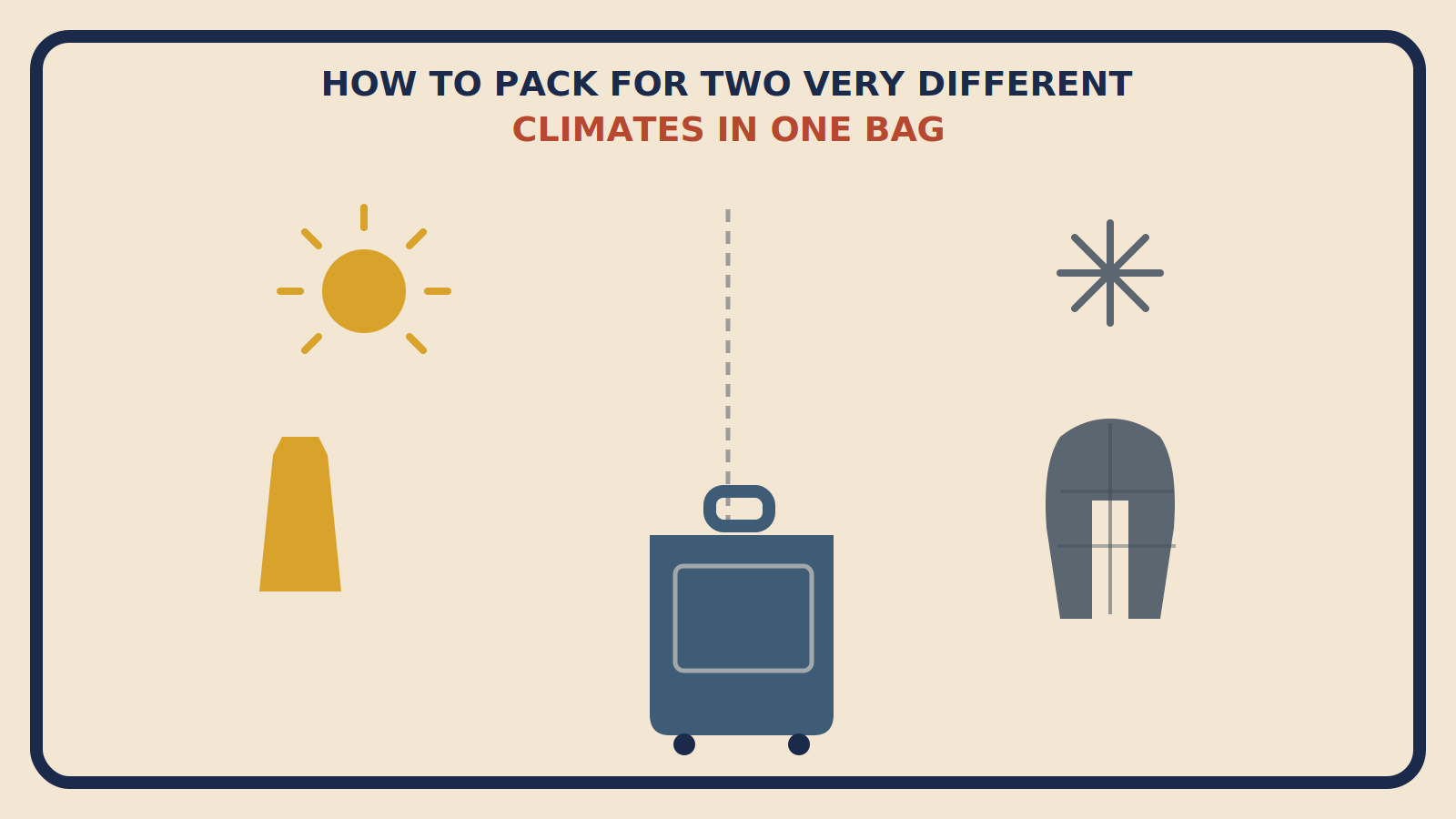
Separate packing cubes by climate, wear your bulkiest items on the plane instead of packing them, and build a neutral black, white, and gray core, since a trip that swings from 80-degree beaches to 30-degree cold genuinely fits into one carry-on with the right system.
Quick Answer
- Wear your bulkiest items, puffer jacket, boots, on the plane instead of packing them
- Use separate packing cubes for each climate, not just by clothing category
- Build a neutral core in black, white, and gray so pieces work across both cubes
- Cover the cold leg with two sweaters, two jeans, one puffer, and rain-or-shine boots
- Skip single-use pieces, pack what you'll actually reach for, not a complete checklist
Why This Genuinely Fits in One Carry-On
80-degree beaches one week, 30-degree New England cold the next, one professional organizer packed exactly that trip, sunny Mexico, then Thanksgiving in Boston, into a single small carry-on, and was upfront about it: it's genuinely challenging, even if it means looking a little ridiculous layering everything on for the flight itself.
Wearing your bulkiest items on the plane, the puffer jacket, the boots, whatever takes up the most room folded, rather than packing them is the first real lever. It looks a bit much walking through security, but the suitcase space it frees up is worth it every time.
Using packing cubes to separate by climate specifically, not just by category, is the second. One cube held everything for the warm-weather leg, one held everything for the cold-weather leg, which made switching between locations fast, grab the right pouch, and you're not digging through a jumbled bag trying to remember which sweater made the cut. Keeping heavy clothes away from lighter clothes matters for the same reason: a puffer jacket and a sundress crammed into the same space compress each other badly and make both harder to find when you need them.
Common Mistakes
People assume any color scheme works fine as long as items are versatile individually. In practice, neutrals are necessary here more than on almost any other kind of trip, sticking to black, white, and gray meant everything worked together regardless of which climate's pouch it came from, the same two solid tees functioned as connective tissue between the whole warm-weather wardrobe and the whole cold-weather one.
People assume the cold-weather leg needs a lot of separate bulky pieces. In practice, building on layers rather than packing bulk works better: two sweaters, two pairs of jeans, and one real puffer jacket covered an entire cold-weather stretch, with rain-or-shine boots pulling double duty across wet and cold conditions alike.
People assume packing a wider variety of outfits prevents boredom or unworn items. In practice, the opposite happened for one traveler, the white jeans and several blouses never got worn, she wore one dress over her swimsuit on repeat for the entire warm-weather leg instead, while the umbrella and a beanie also went unused and a pair of gloves she hadn't packed would have genuinely helped.
People assume every piece of specialized gear needs to be packed and carried. In practice, borrowing is worth considering if you're staying with friends or family at one leg of the trip, she skipped packing her own hiking shoes for the cold-weather stretch by borrowing a pair once she arrived, a genuinely underused way to cut weight.
Building the Neutral Core That Bridges Both Climates
The wear-bulkiest-items-on-the-plane tip, the climate-separated packing cube strategy, the neutral color palette approach, the specific cold and warm weather item lists, and the honest hits and misses are all drawn from Shira Gill's own multi-climate carry-on packing breakdown, based on her real Mexico-then-Boston trip.
Uniform, repeat-heavy dressing beats a "complete" wardrobe on a trip like this. Fewer decisions about what to wear each day means more actual presence in the places you're visiting, the goal isn't a different outfit for every day, it's a small, functional set that removes the decision entirely.
If manually sorting which pieces belong in which climate-specific pouch feels like more mental math than you want to do by hand, our AI packing apps vs. manual lists piece covers tools, JetKit included, built to handle exactly this kind of multi-leg, multi-climate planning for you.
Whatever two climates your next trip bridges, JetKit builds the packing list around your closet and your trip so the climate-separated system above is already sorted before you start folding.
Frequently Asked Questions
How do I pack for a trip with two very different climates in one carry-on?
Separate packing cubes by climate rather than by category, wear your bulkiest items on the plane instead of packing them, and build a neutral core in black, white, and gray so pieces from either climate's cube still work together.
Should I wear my heaviest clothes on the plane for a multi-climate trip?
Yes. Wearing the puffer jacket, the boots, whatever takes up the most room folded, rather than packing them frees up real suitcase space every time. It looks a bit much walking through security, but the trade-off is worth it.
Why separate packing cubes by climate instead of by category?
One professional organizer used one cube for everything on the warm-weather leg and one for everything on the cold-weather leg, which made switching between locations fast, grab the right pouch, and you're not digging through a jumbled bag trying to remember which sweater made the cut.
How many sweaters and jackets do I need for the cold-weather leg?
Two sweaters, two pairs of jeans, and one real puffer jacket covered an entire cold-weather stretch for one traveler, with rain-or-shine boots pulling double duty across wet and cold conditions alike, rather than packing separate items for each scenario.
What packing mistakes are common on multi-climate trips?
Packing single-use pieces that never get worn is the biggest one. One traveler's white jeans and several blouses went unused, along with an umbrella and a beanie, while a pair of gloves she hadn't packed would have genuinely helped on the icy days, proof that reachable basics beat a 'complete' checklist.
JetKit is an AI app that builds your packing list automatically based on your closet and your trip.